What I Learned Leading Transformation at Airbus — And What Most Executives Get Wrong About AI

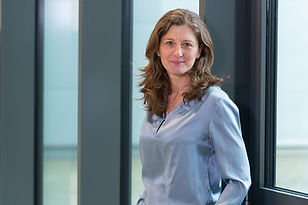
By Sandra Collomb, Founder of SANOPAZ
Here's something I didn't expect when I started leading digital transformation at Airbus: the hardest part was never the technology.
It was the people. Always the people.
The brilliant engineers who felt threatened. The managers who nodded in meetings and quietly resisted everything. The senior leaders who said the right words about AI and then asked their teams to keep doing things exactly as before.
I've spent 15+ years in aerospace and transportation, across Europe, Asia, and Australia, leading transformation programs at scale. And now, through SANOPAZ, I work with executives navigating AI adoption in their organisations. The pattern I see is consistent, regardless of industry or company size.
Most leaders are approaching AI adoption backwards.
The mistake: starting with the tool, not the leader
When executives ask me about AI adoption, they usually want to talk about tools. Which platform should we deploy? How do we upskill our teams? What's our AI roadmap?
These are the wrong first questions. Not because they don't matter, they do. But because they skip the foundational question that determines whether any of it will land:
Are you, as a leader, genuinely ready to lead through this shift?
AI readiness isn't about knowing how large language models work. It's about being honest with yourself about what you're afraid of, what assumptions you're carrying, and what example you're actually setting. Not just in your all-hands presentation. In the small daily decisions your team watches closely.
What I saw on the shop floor
I have a habit of walking the shop floor. Not to inspect things, but to listen.
And what I heard, over and over, during our digital transformation programs was this: "We don't really know what leadership wants from us with all this AI stuff. They say it's important but nobody's showing us how."
That gap, between what leaders say and what teams actually experience, is where AI adoption dies. Not in the technology. In the trust.
I've seen teams that were technically capable of adopting AI tools completely stall because the leadership layer above them wasn't modelling the behaviour they were asking for. And I've seen teams with far fewer resources move fast and build real capability, because their leaders were honest about not having all the answers, curious enough to learn alongside their people, and clear enough about direction to create safety for experimentation.
The difference wasn't the tool. It was never the tool.
Three things that actually move the needle
Based on what I've seen work, and not work, across complex organisations, here's what genuinely drives successful AI adoption at the leadership level:
1. Radical honesty about your starting point. Not the polished version you'd present to the board. The real one. What do you actually know about AI? What are you anxious about? What do you need to learn? Leaders who are honest with themselves about this move faster. Leaders who perform confidence they don't feel create noise, delay, and confused teams.
2. Clarity over certainty. You don't need to have all the answers. You need to be clear enough about direction that your people can make good decisions without you in the room. This is harder than it sounds. It requires you to have done the thinking, not just attended the briefings.
3. The human side is the hard side. Every AI transformation program I've been part of that struggled had a people problem, not a technology problem. Culture, trust, psychological safety, the ability to hold ambiguity, these are the actual constraints. Build them deliberately, or they become your ceiling.
What AI coaching for executives actually looks like
When I work with senior leaders on AI adoption through SANOPAZ, we don't start with a technology assessment. We start with the leader.
What's the story you're telling yourself about AI? What's driving your urgency, or your resistance? Where are you performing confidence you don't actually feel? What do you need to be able to do, as a leader, that you can't do yet?
From there, we build the clarity, the language, the habits, and the courage to lead the shift. Not just announce it.
If you're a CHRO navigating AI's impact on your workforce, a CEO trying to make AI adoption real rather than performative, or a VP who knows something has to change but isn't sure where to start, this is the work.
The bottom line
AI adoption succeeds or fails at the leadership layer. Not the technology layer. If the leaders driving it aren't clear, honest, and genuinely modelling the change they're asking for, the rest is theatre.
The good news: every single part of this is learnable.
I've seen it. I've lived it. And it's what I build with leaders every day.
If this resonates with where you are right now, let's talk. Book a free 20-minute Strategy Discovery Call, no pitch, no pressure. Just a real conversation about what you're navigating and whether I can help.
Sandra Collomb is the founder of SANOPAZ. She previously served as VP Digital International and Head of Digital Governance & Transformation at Airbus, with 15+ years of international experience across Europe, Asia, and Australia. She works with C-suite executives, CHROs, and VPs on AI leadership readiness, organisational transformation, and building the human conditions for change to succeed.


Comments